
Facebook Page vs Group: Which Is Better For Your Business?
A Facebook Page and Group serve different jobs. A Page gives your business a public brand presence and access to paid promotion, while a Group creates a community where members can participate and potentially discover you through Facebook’s own recommendations.
For many businesses, the strongest setup is both: use the Page to represent the company and a Group to build an audience around a relevant interest or community. This guide compares the tradeoffs so you can decide which setup fits your goals.

What is the difference between a Facebook Page and Group?
A Facebook Page works best as the public face of your business, where you can publish updates and build visibility. A Facebook Group is better when the value comes from members interacting with each other around a shared interest.
| Core differences | Facebook Page | Facebook Group |
|---|---|---|
| Purpose | Build a public presence for a business, brand, organisation, or public figure. | Build a community around a shared interest, customer need, or topic. |
| Discovery & Visibility | A public brand presence people can deliberately find and follow. | Public and visible private Groups can be discovered within Facebook; Facebook may also suggest Groups to people who don’t belong to them. |
| Posting model | Page managers publish the main content while followers primarily react, comment, and share. | Members can create posts and start discussions, subject to the Group's settings and moderation rules. |
| Business tools and community controls | ||
| Advertising | Supports boosted posts and Meta advertising, making it better suited to paid reach. | Primarily an organic community space rather than a direct advertising property. |
| Analytics | Page Insights focus on content, audience, and business performance. | Group Insights focus more on member activity and community engagement. |
| Community controls | Gives your business control over its own publishing and Page access. | Gives admins more control over membership and participation, including moderation tools and privacy settings. |
So, Should You Choose a Facebook Page or Group?
The better option depends on what you need Facebook to do for your business.
Choose a Facebook Page when...
Your main goal is to give your business a public presence, publish branded content, or reach new audiences through paid promotion. A Page is the stronger starting point when your business needs to be discovered before people have any relationship with it.
Choose a Facebook Group when...
The value comes from people participating rather than simply following your updates. A Group makes more sense when customers or members benefit from asking questions, sharing experiences, or talking to each other.
Use both when...
You need public visibility and a deeper community. Your Page can represent the business and attract an audience, while a connected Group gives people somewhere to participate more actively once they want a closer relationship with the brand.

Facebook Page vs Group: Key Tradeoffs
A Facebook Page and Group can both help you build an audience, but they create value in different ways. The better choice depends on whether you need people to find your business, participate with each other, or both.
Discovery and Reach
Facebook Pages and Groups can both help new people discover you, but in different ways.
A Facebook Page gives your business a permanent public presence that people can find when searching for your brand on Facebook or elsewhere online.
A Facebook Group can create stronger discovery within Facebook itself. Facebook actively recommends Groups it thinks people may find relevant, giving eligible public or visible Groups opportunities to reach people who have never encountered the community before. Hidden private Groups are not recommended this way.
Best fit: Choose a Page when you need a public home for your brand. A Group may have more upside for organic discovery inside Facebook when the topic naturally creates an active community.
Paid Advertising
A Facebook Page has the clearer advantage when you want to pay to reach people beyond your existing audience.
Businesses can turn Page content into ads or build campaigns through Meta’s advertising tools. You can still define audiences using factors such as location and interests, while Meta’s Advantage+ tools can also find people its systems predict are likely to respond.
A Facebook Group does not offer the same direct paid advertising model. Group growth relies more heavily on Facebook discovery, member participation, and promotion through other channels, although a connected Page can help bring attention to the Group.
That makes paid reach an important distinction between the two formats rather than proof that Pages naturally reach more people.
Best fit: Choose a Page when paid acquisition is an important part of your Facebook strategy. Choose a Group when the value depends more on building an active community after people discover it.
Member Participation
Facebook Groups have the clearer advantage when the value comes from people participating with each other.
A Page is still interactive: followers can comment, react, and share your posts. But the business generally remains at the centre of the conversation.
Groups make member participation a bigger part of the experience. People can start discussions, ask questions, and share their own experiences, so the audience can become part of what makes the community useful.
This makes Groups particularly well suited to customer communities, peer support, and shared-interest communities where members have something useful to contribute.
And to be clear - a Group doesn’t have to be built around your brand either. A business can create a community around a niche, problem, or shared interest its ideal customers already care about. This category/interest-led approach gives like-minded prospects somewhere to ask questions, share experiences, and interact without every conversation becoming a sales pitch.
And if you’re transparent about who runs the Group, you can build familiarity with your business over time while occasionally sharing relevant announcements, offers, or promotions when they genuinely fit the community.
Best fit: Choose a Group when conversations between members create value you could not produce through brand publishing alone.

Management Effort
That extra participation comes with more responsibility.
A Facebook Page gives your business relatively tight control over what it publishes. You still need to respond to comments and manage the Page, but most of the content starts with you.
A Group introduces more moving parts because members can contribute too. As the community grows, admins may need to manage membership, moderate discussions, and deal with unwanted content.
Facebook provides tools that can automate parts of this work, but active communities still benefit from human oversight.
Best fit: A Page generally requires less community management. Choose a Group when the value of member participation justifies the additional moderation.
Membership, Privacy & Moderation Controls
Facebook Groups give you much more control over who can participate and how the community operates.
Groups are now either public or private. In public Groups, anyone can see what members post, while people on Facebook can also see who belongs to the Group. Private Groups limit that content to members, while admins can choose whether the Group is visible in Facebook search or hidden from people who have not been invited.

That flexibility makes Groups useful when access and community boundaries matter. A customer community, for example, may benefit from being private but still easy to discover, while a smaller membership or internal Group may make more sense hidden.
Admins also have tools that can reduce the work involved in running an active community. Admin Assist can automatically handle parts of moderation and membership approval based on criteria you set, helping you manage repetitive decisions as the Group grows.
Facebook has also expanded how members can participate under nicknames, although the exact controls available can vary by Group. In our Group, Facebook now treats nicknames separately from anonymous participation, and we can’t turn the feature off.
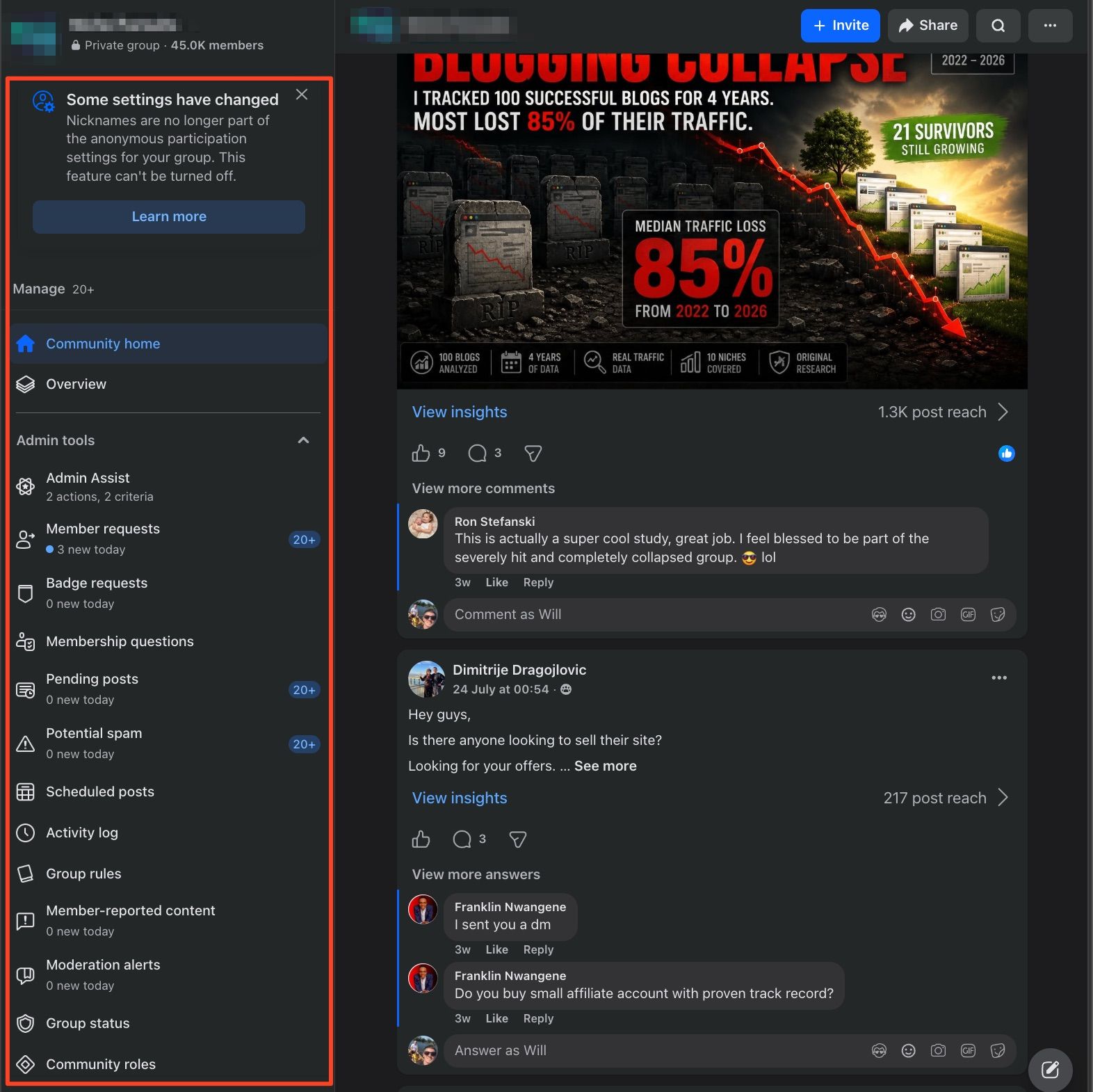
These controls are one of the bigger differences between a Facebook Page and Group. A Page gives your business control over what it publishes; a Group gives you more control over the environment in which other people participate.
Analytics and Insights
Both Facebook Pages and Groups provide analytics, but the useful question is what you are trying to measure.
Page analytics are more useful for understanding how your branded content and public presence perform. They can help you see how people respond to what your business publishes and which content attracts attention.
Group Insights are more community-focused. They help admins understand member activity and engagement, making them more useful when the health of the community itself is what you need to assess.
The distinction follows the purpose of each format: Page analytics help you understand your audience and content performance, while Group analytics help you understand participation inside the community.
If you mainly want to evaluate branded publishing, Page analytics give you the more relevant view. If you want to know whether members are actually participating, Group Insights matter more.
Search Visibility and Branded Discoverability
Facebook Pages still have a useful advantage outside the Group-discovery question: they give your business a persistent public identity that people can deliberately look for.
Public Facebook information can appear in Facebook search and external search engines, giving people another way to encounter or verify your business when researching your brand.
The benefit here is branded discoverability rather than a direct SEO boost. A complete Page gives people another public place to confirm who you are and learn about your business.
Facebook referral traffic can still be valuable when people click through to your website, but you should treat those visits as an audience benefit rather than evidence that Facebook engagement directly improves organic rankings.
Your Facebook Page should therefore support your wider search presence rather than replace the SEO work happening on your own website.
Which Should Your Business Choose: a Facebook Page, Group, or Both?
By this point, the choice should come down to the role you need Facebook to play.
Choose a Facebook Page when your priority is maintaining a public brand presence and publishing as the business.
Choose a Facebook Group when member participation is part of the value and you are prepared to manage the community that develops around it.

Use both when those jobs complement each other. Your Page can represent the business publicly, while the Group gives customers or enthusiasts somewhere to participate more deeply.
There is no need to choose based on which format supposedly gets more reach. Pages and Groups create different routes to discovery, and the better option depends on what you want people to do once they find you.
Facebook Page vs Group: Final Recommendation
A Facebook Page and Group are not really substitutes for the same job.
A Page gives your business a public home on Facebook. A Group creates a space where the community itself can contribute more of the conversation.
For many businesses, that makes the most useful setup a combination of the two: the Page represents the brand, while the Group gives people a reason to participate around it.

About Will James
Will is a content strategist and co-founder of 8-Bit Content. He helps businesses get more from their content and has spent more than a decade working across search, publishing, and marketing. In his free time, he’s almost certainly with family and friends, off on an adventure, learning something new, or trying to get a cat’s attention.

About Joshua James
Joshua is an education leader and co-founder of 8-Bit Content. He has spent more than 15 years helping schools grow, strengthen their digital presence, and create safer learning environments. In his free time, he’s usually with his two kids, taking on a new challenge, or pretending he has reached the end of his to-do list.



Let’s grow your online visibility together!
Get practical content tips and checklists
Contact Us
You can also find us here:
